An OS that
evolves itself.
Help us build it.

Linux for AI agents — but unlike Linux, when it breaks, it patches its own code and gets smarter. Your vibe coding tool is the chisel.

Tux

Linux (1991)

Tux sits. Humans maintain it.

vs
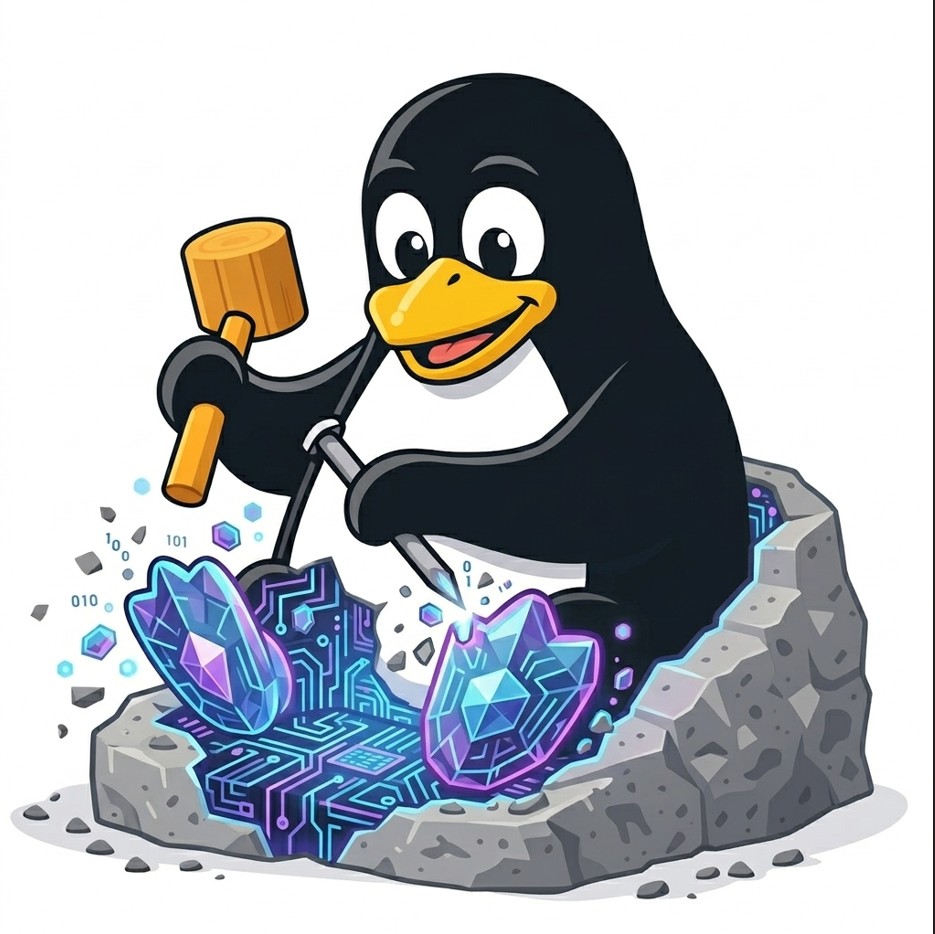
Chip

OpenSculpt (2026)

Chip sculpts itself. Your vibe coding tool is the chisel.

The problem

What happens without an OS

We ran 10 AI agents for 72 hours. Here's what happened when nothing managed them.

Resources

OOM Massacre

10 agents spawned 50 containers. Nobody tracked ownership. 68GB RAM gone. Host dead by morning.

Like programs before Unix: no process table
Lifecycle

Zombie Services

Agent deploys CRM, reports "done", exits. 3 hours later CRM crashes. Dashboard still green.

Like daemons before systemd
Memory

Amnesiac Agents

Agent 1 discovers the API. Agent 2 starts from zero. Same discovery, same cost. Every time.

Like programs before shared filesystems
Budget

Token Bonfire

10 daemons polling at 3am. Answer: nothing. Cost: $86/day doing absolutely nothing.

Like busy-waiting before interrupts
Honesty

Green Lies

Dashboard shows success. CRM dead. Database empty. Agent verified with the wrong command.

Like exit code 0 on a segfault
Identity

No Process Model

In every framework, agents are function calls. No PID, no budget, no permissions, no trail.

Like programs in DOS

11 war stories. All real. All dated. Read them all →

Architecture

An actual operating system

5 layers. The first 4 mirror Unix. Layer 5 has no equivalent.

Layer 5
Evolution Engine
Detects failures, reasons about gaps, generates fixes, deploys them.
Nothing in Linux
Layer 4
OS Agent (Shell)
LLM-powered brain. Interprets any command. Spawns agents.
bash / zsh
Layer 3
TheLoom (Memory)
Persistent knowledge. Skills, constraints, resolutions as .md files.
ext4 / VFS
Layer 2
Process Manager
Agent lifecycle: spawn, schedule, supervise, kill. Token budgets.
PID / cgroups
Layer 1
AgentRuntime (Kernel)
State machine. Event bus. Audit trail. Tool registry.
kernel / syscalls

*Layer 5 is what makes it different: the OS evolves itself

Self-evolution

Break it. Watch it fix itself. Try again.

When an agent fails, the OS reasons about the gap, writes a fix, and the same agent retries with that fix applied.

1

Agent Fails

Real failure from real demand

2

OS Detects Gap

Demand signal created

3

Reasons About It

Reads codebase + environment

4

OS Evolves Itself

Patches code, writes new tools

5

Retry Succeeds

Same agent. Reads fix first. Wins.

real evolution — march 28, 2026
# User says: "Install a CRM for my sales team"

✗ Agent tries Docker — no daemon available
✗ Agent tries Docker again — same failure
✗ 3 attempts, 200K tokens wasted

◆ Demand signal: "docker not available"
◆ OS reads environment: container, apt-get available

✎ Writes constraint: "No Docker. Use apt-get + pip."
✎ Saved to .opensculpt/constraints.md

✓ Agent retries — reads constraint first, skips Docker
✓ Installs CRM via apt-get. 5K tokens instead of 200K.
✓ Resolution saved. Every future retry knows.

This is real. Not a mockup. Read war story #11 →

Join the revolution

One chisel started this. We need yours.

One person vibe coded the kernel, process manager, memory layer, and 11 war stories of fixes. But one chisel can only sculpt so much.

1

Run the OS

Install it. Use it for real. Deploy a CRM, organize files, track spending.

2

Watch it fail

It will. Every failure creates a demand signal — a .md file saying what broke.

3

Pick up your chisel

Open your vibe coding tool. Say "fix the top demand." Your AI writes the fix.

4

The stone gets sharper

Your fix deploys. Knowledge syncs. The next person who hits that wall — doesn't.

How do you sculpt?

Pick your path. We'll hand you the right chisel.

⬇️
Just install it
pip install — works on any OS
🐍
pip install opensculptWindows, macOS, Linux — Python 3.11+
copy
☁️
GitHub Codespacesno install — runs in browser, 120 free hrs/mo
⌨️
I live in the terminal
Claude Code, Aider, or Codex
🔮
Claude Codegit clone & open
copy
🛠
Aidergit clone & open
copy
📦
Codexgit clone & open
copy
1
chisel
=
11
war stories
+
5
OS layers
+
9
days
Now imagine 100 chisels. Imagine 1,000.
Linux had thousands of C programmers. We need thousands of vibe coders.
You don't need to know Python. You need a vibe coding tool and 10 minutes. Every environment is different — and each chisel teaches the OS something new.
Chip

In 1991, Linus posted:
"just a hobby, won't be big."

Thousands picked up the chisel anyway. They shaped computing forever. This is that moment again — for intelligence. The revolution started. The stone is waiting.

Pick Up a Chisel ⚡ Open in Codespaces The Manifesto War Stories